Before and after the show
The Barrio de las Letras at night
A walking guide to the Barrio de las Letras around Tablao 1911: Plaza de Santa Ana, the old theatre, Calle de las Huertas and the Cat's Alley.
Book your hour of flamenco ↗Quick answer
The tablao stands on Plaza de Santa Ana, the centre of the Barrio de las Letras, the quarter where Cervantes, Lope de Vega, Quevedo and Góngora lived in the 17th century. Around it you find Teatro Español, verse set into the pavement of Calle de las Huertas and the mirrored Callejón del Gato beside the tablao.
The district in a paragraph
Madrid's tourism board puts the Barrio de las Letras between Calle de la Cruz, Carrera de San Jerónimo, Paseo del Prado and Calle Atocha. It takes its name from the 17th-century Golden Age writers who made their homes there, among them Cervantes, Lope de Vega, Quevedo, Tirso de Molina and Góngora. The quarter also drew theatre-goers to the open-air corrales de comedias of the same era. Today it is a district of plaques, small theatres, tapas bars and cafés, and Tablao 1911 sits at the heart of it.
Plaza de Santa Ana
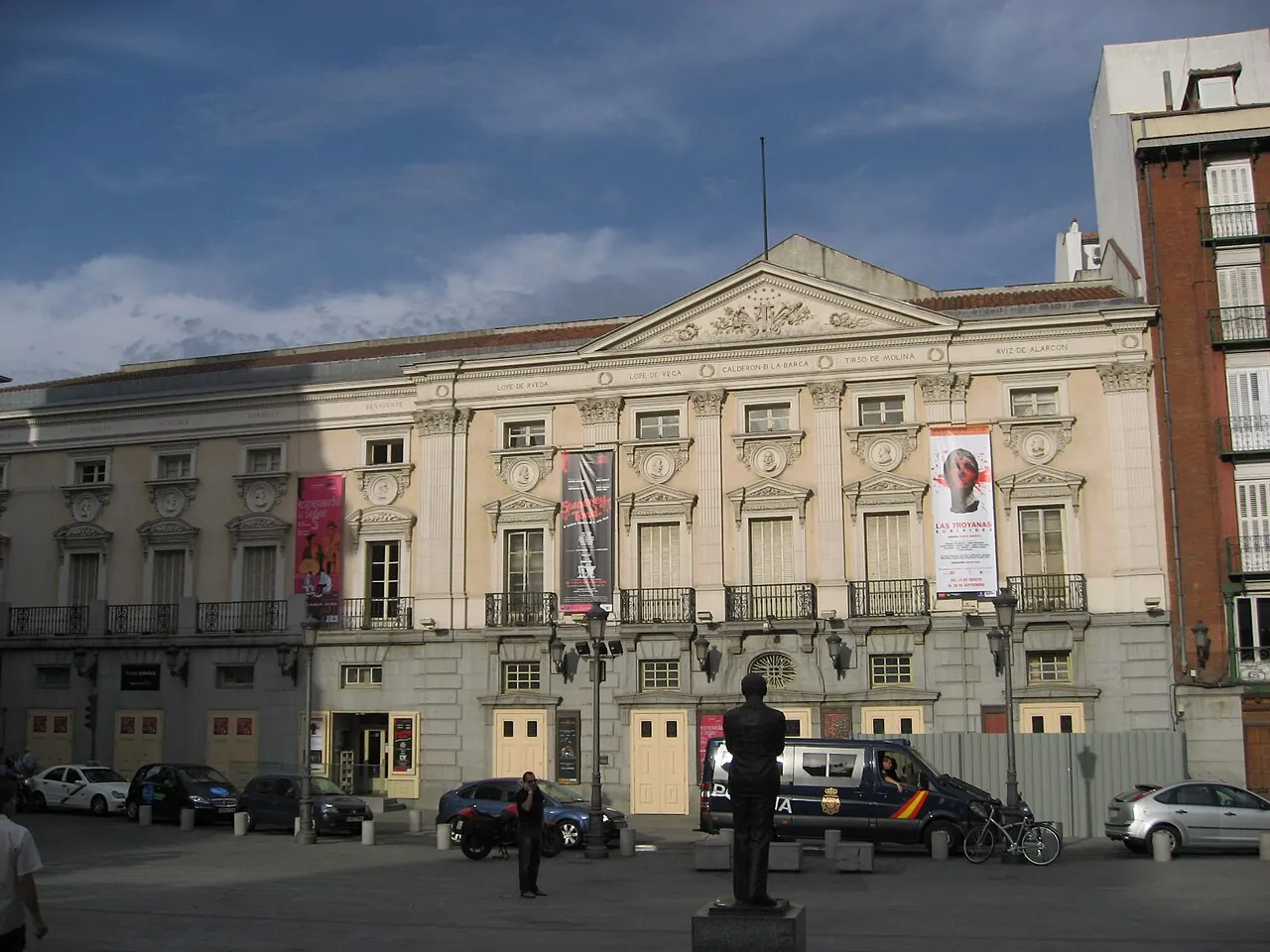
Madrid's tourism board calls Plaza de Santa Ana the nerve centre of the quarter. Wikipedia says Joseph I demolished a Carmelite monastery and neighbouring houses here in 1810, partly for urban sanitation, and that the monastery gave the square its name. Spanish Wikipedia adds that the convent was founded in 1586. The square now holds statues of the playwright Calderón de la Barca and the poet Federico García Lorca. Spanish Wikipedia dates the Calderón monument to 1879 and the Lorca statue's installation in front of the theatre to 1996.
Teatro Español and the old corrales
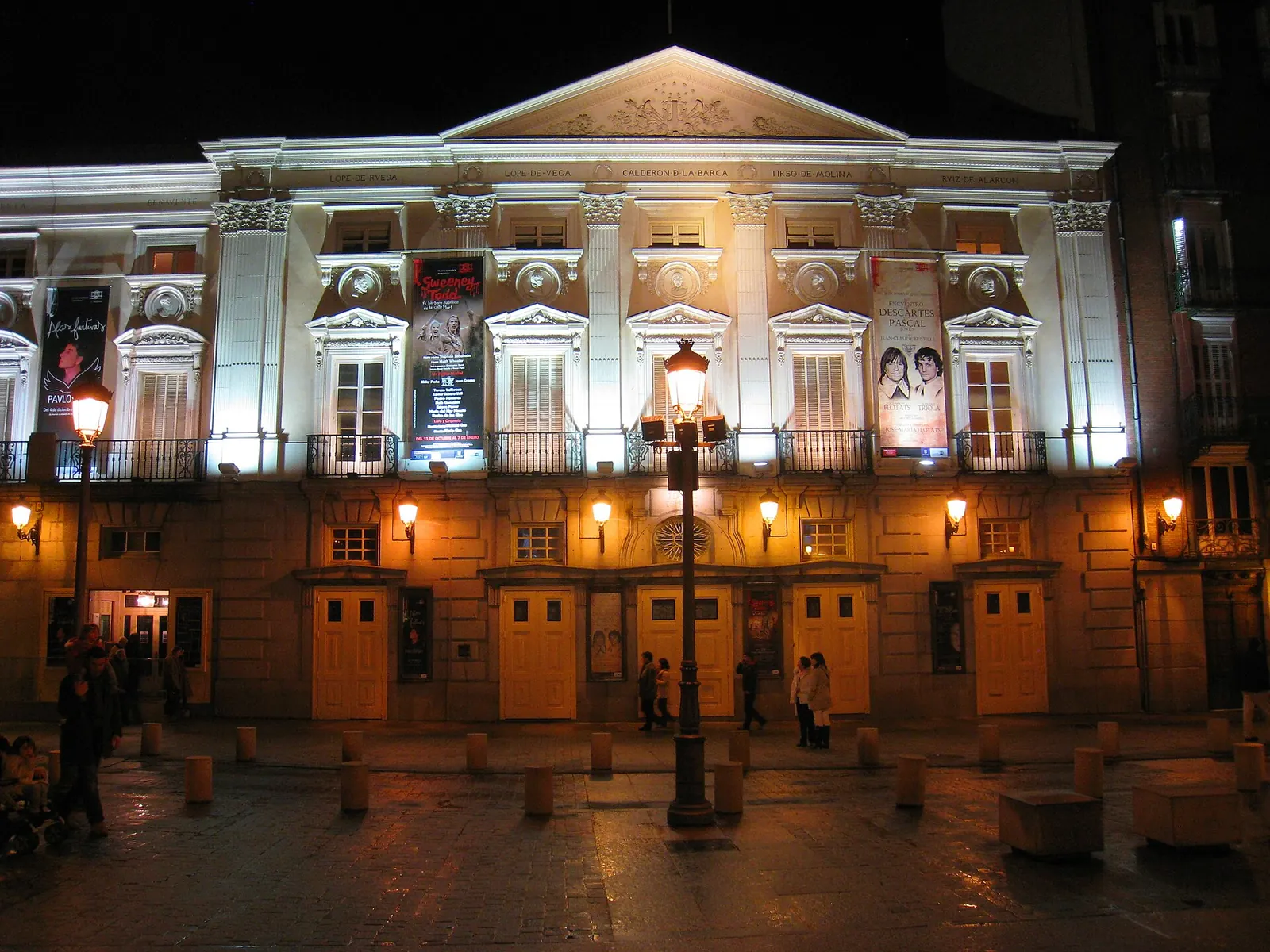
The theatre on the east side of the plaza stands on the site of the Corral del Príncipe, one of the open-air playhouses of the Golden Age. Wikipedia describes it as the oldest theatre in Madrid. The tourism board says the Corral de Comedias del Príncipe is the present-day Teatro Español and that it staged the best comedies by Spanish Golden Age playwrights. Spanish Wikipedia dates the name Teatro Español to 1849. Check its programme if you want a play before or after your flamenco hour.
Calle de las Huertas and the verse underfoot
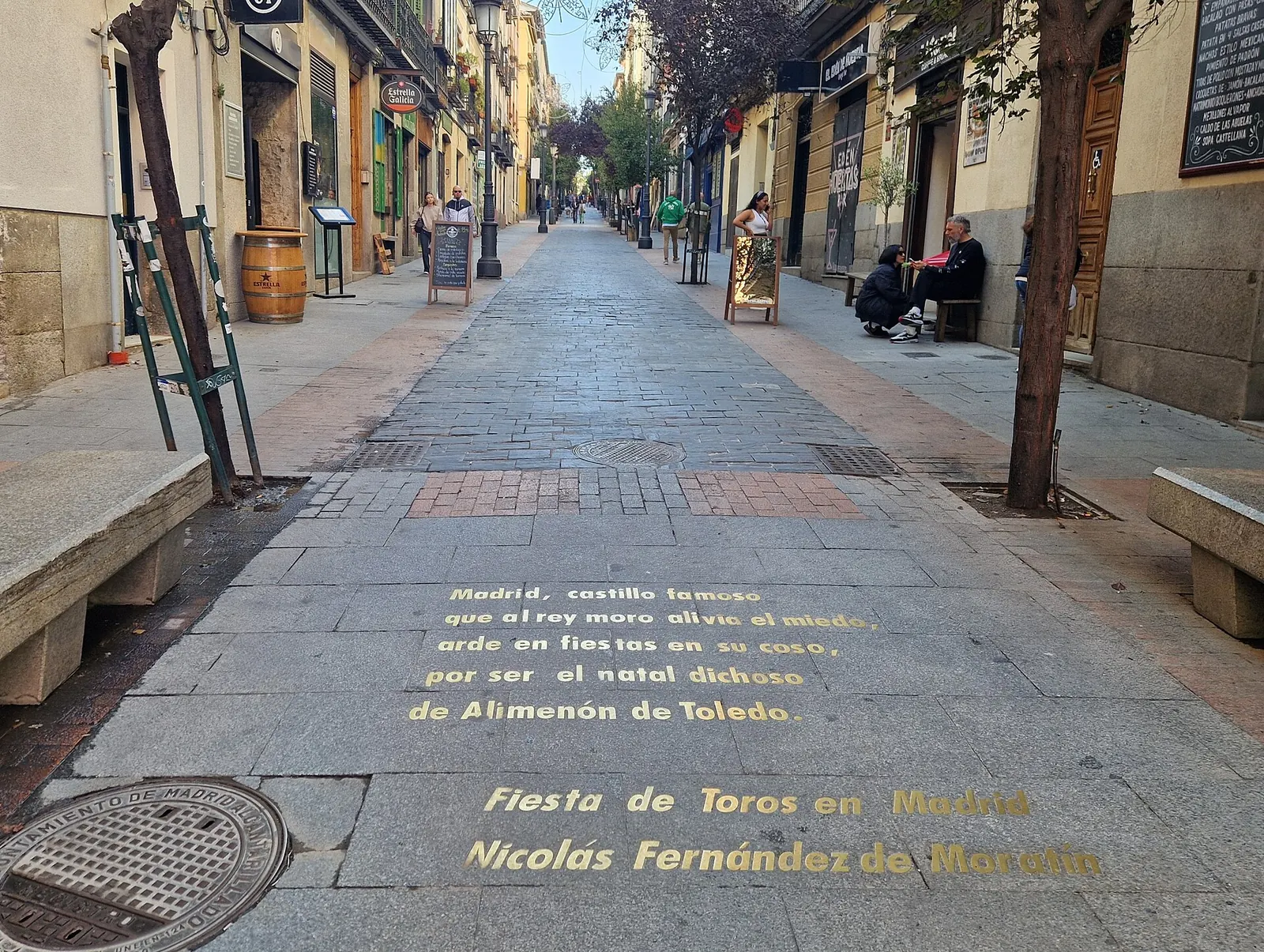
Calle de las Huertas runs from Plaza del Ángel to Plaza de la Platería de Martínez, and Madrid's tourism board says it is engraved with quotations from literary works by leading Spanish authors. The words are set into the pavement in gold lettering, so you read them as you walk. The tourism board's page for the quarter lists food and drink and nightlife among its attractions, so dinner before an evening session or a drink afterwards is close at hand. The engraved lines cost nothing to read and reward a slow walk before the show.
The Cat's Alley beside the tablao
The tablao's own history places it on the corner of Núñez de Arce and Álvarez Gato streets, called by locals the Callejón del Gato, the Cat's Alley. The tourism board says the street is famous for appearing in Ramón del Valle-Inclán's play Luces de Bohemia and that it features distorting concave and convex mirrors. The mirrors are one of the lane's best-known features, and the street also hosts events in the city's annual Theatre Night. The tablao stands at the corner where this lane meets Núñez de Arce, so the lane is the natural place to start a walk.
The writers' houses
Two houses give the district its literary reputation. Madrid's tourism board says Lope de Vega lived for the last twenty-five years of his life in the house that is now a museum dedicated to him, and that Cervantes lived in a house on what is now Calle Cervantes, on the corner with Calle del León, where he died. The Convent of the Barefoot Trinitarians, known as the place where the tomb of Cervantes lies, dates from 1673. Opening hours change, so look up each museum's own page before planning a visit.
Planning around a session
The session time is on your confirmation, and the venue advises turning up about a quarter of an hour ahead. Leave a margin on either side of the show rather than packing the evening. The plaza has terraces on most of its sides, according to Wikipedia. The tablao's ticket carries a drink and no meal, so decide in advance whether you will eat before the show, after it, or from the add-on tapas menu on the venue's own booking page.
Frequently asked questions
Why is it called the Barrio de las Letras?
The name, meaning the Literary Quarter, comes from the Golden Age writers who lived there in the 17th century, among them Cervantes, Lope de Vega, Quevedo, Tirso de Molina and Góngora.
What is the Callejón del Gato?
Calle de Álvarez Gato, the lane beside the tablao. Madrid's tourism board says it is famous for Valle-Inclán's play Luces de Bohemia and for its distorting mirrors.
Where are the verses on Calle de las Huertas?
They are engraved in the pavement along the street between Plaza del Ángel and Plaza de la Platería de Martínez, according to Madrid's tourism board.
Sources