The singer behind the legend
Antonio Chacón and Villa Rosa
Who the Jerez singer Antonio Chacón was and why Villa Rosa, now Tablao 1911, built its Madrid flamenco reputation around him in the 1920s.
Book your hour of flamenco ↗Quick answer
Antonio Chacón was a flamenco singer born in Jerez in 1869 who died in Madrid in 1929. According to the venue's history, the owner of Villa Rosa, now Tablao 1911, signed him in 1921 and the room became a meeting place for the masters of the day. He is still named as the figure behind its nickname, the Cathedral of Flamenco.
A singer from Jerez
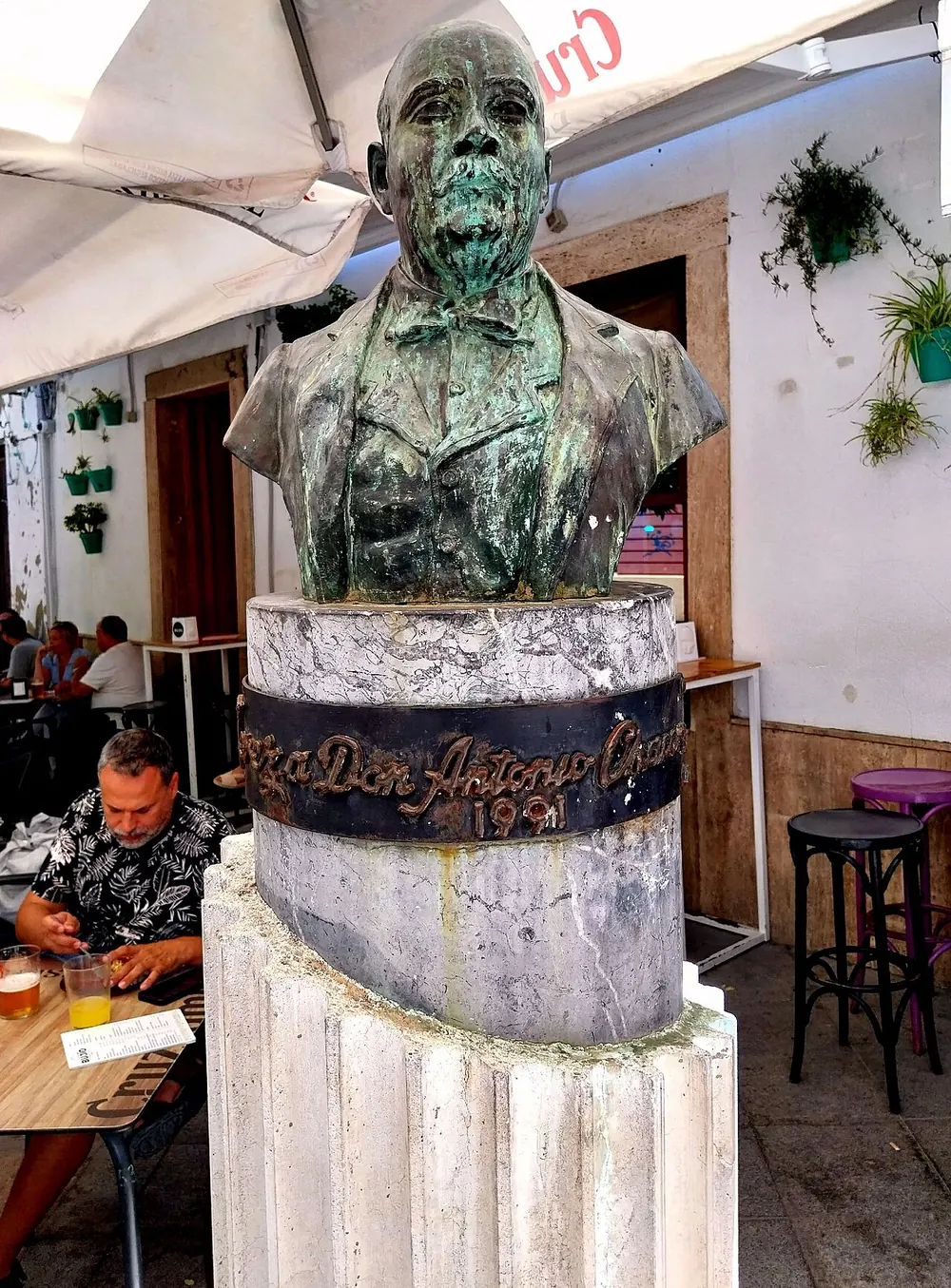
Wikipedia gives Antonio Chacón's birthplace as Jerez de la Frontera and the year as 1869, and says he began earning a living from flamenco around 1884. He toured Andalusia with the dancer Antonio Molina and the guitarist Javier Molina, known as the Molina brothers. The bust in the photograph stands in Jerez. He was later hired by Silverio Franconetti for his café in Seville, an early flamenco room of the kind the café cantante made famous in the 19th century.
A voice with the title Don
Wikipedia says Chacón was noted for the cartagenera, the malagueñas, the granaína and the media granaína, and that his skill earned him the popular title Don. It also quotes the singer Fernando el de Triana, who said that leading singers gave up their seniority so that Chacón could sing last, since the audience would leave after him. Many regard him as the best of all time, the page says. In 1922, at the Concurso de Cante Jondo in Granada, he was given the place of honour and presided over the judges.
The contract of 1921
The tablao's own history says that in 1921 the owner of the room offered the premises to the master and signed a contract linking him to it for life. It describes Chacón as a cultured and elegant figure who moved away from the old image of the bandit, supported by refinement and deep knowledge of flamenco. Spanish Wikipedia says the owner persuaded him to leave Los Gabrieles, an earlier Madrid flamenco room, for Villa Rosa. The two sources match on the year and on the result: the room acquired a singer other artists came to hear.
El Rey del Cante
The venue's history calls Chacón the King of Andalusian Flamenco Song, El Rey del Cante Flamenco Andaluz, and says the hiring of the singer, together with the Madrid guitarist Ramón Montoya, attracted the best dancers, guitarists and singers. It lists names from the period who performed at the room's flamenco gatherings, among them La Niña de los Peines, Manuel Torre and Pepe Marchena, and the guitarists Miguel Borrull and Manolo de Huelva. Wikipedia says Montoya accompanied Chacón for over a decade, until the early 1920s.
A room where old and new met
According to the tablao's history, those evenings made the room a meeting place where the old masters mixed with new generations, and the legend of the Cathedral of Flamenco in Madrid began. It adds that amateurs of considerable economic power followed the artists. Spanish Wikipedia says Chacón performed at Villa Rosa until his death in 1929. The venue says the room remained the heart of Madrid's flamenco until it closed its doors in 1963, then reopened a year later. The venue's history says the room keeps among its ceilings, basements and tunnels thousands of anecdotes and secrets from an era when flamenco lived its splendour in private.
What you can and cannot take from this
The history belongs to the room, not to the evening you book. The cast of artists on stage changes every week, according to the venue, so the names in this guide belong to the room's history and not to your evening. What you can take away is context: the walls you sit among were fitted out by the late 1910s, and the Cathedral of Flamenco nickname rests on a period that the venue dates to the 1920s. For the building itself, the guide to the tiled façade covers the architecture and dates in more detail.
Read next: Villa Rosa and its tiled façade
Listening for the style
Wikipedia names the cartagenera, the malagueñas, the granaína and the media granaína as the forms Chacón was noted for. Its page on palos groups malagueñas and granaínas among the songs sung in free rhythm. The artists choose what to play on the night, so no one can promise a particular form. The guide to six forms to listen for gives you a way to hear what you are given.
Frequently asked questions
Who was Antonio Chacón?
A flamenco singer from Jerez, born in 1869 and dead in Madrid in 1929, according to Wikipedia. Many regard him as one of the greatest singers of all time.
When did he join Villa Rosa?
In 1921, according to the tablao's own history, when the owner signed him to a contract tying him to the room.
Will I hear his songs at the tablao?
Not as a promise. The cast and the programme change every week, and the artists choose what to play.
Sources